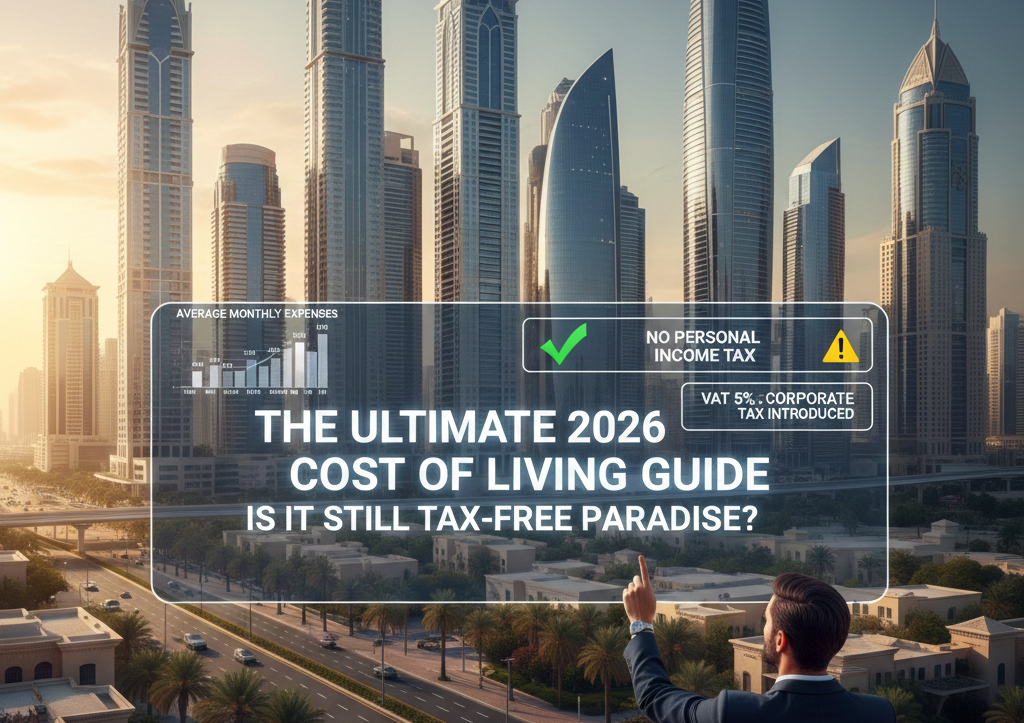
The Ultimate 2026 Dubai Cost of Living Guide: Is It Still Tax-Free Paradise?
Are you considering a move to Dubai? As a city of skyscrapers and endless opportunities, Dubai remains one of the most popular international destinations for professionals, entrepreneurs, and investors worldwide. However, with recent global economic shifts and new local regulations, the most critical question for any serious applicant is: What is the actual cost of living in Dubai in 2026? In this comprehensive guide, we explore every expense an expat will encounter, from the soaring heights of luxury penthouses to the practicalities of daily commuting, providing you with precise details, practical examples, and expert financial analysis to determine if Dubai is still your personal financial paradise.
Housing Costs: A Deep Dive into Your Largest Expense
Housing is not only your largest fixed cost in Dubai but also directly impacts your quality of life, commute time, and access to urban amenities. Based on financial management standards in the UAE, it is generally recommended to spend no more than 30% to 35% of your monthly income on rent to allow sufficient room for savings and investments.
Cost Breakdown by Neighborhood and Property Type:
- Budget & Traditional Areas (Old Dubai & Outskirts): Areas like Deira, Al Qusais, or International City. Here, you can find a renovated studio for between AED 3,500 and AED 4,500 per month. These neighborhoods are a smart choice for those just starting their professional journey in the UAE or those looking to maximize their savings rate.
- Mid-Range & Family-Friendly Hubs: Areas like Jumeirah Village Circle (JVC), Al Barsha, or Dubai Silicon Oasis. These districts are popular for their parks, international schools, and easy highway access. Rent for a modern one-bedroom apartment here fluctuates between AED 6,500 and AED 9,500.
- Luxury & Tourist Hubs (High-End Living): Downtown Dubai, Dubai Marina, Palm Jumeirah, and Business Bay. Living near major commercial and leisure centers costs between AED 12,000 and AED 18,000 for a one-bedroom apartment with premium amenities and water or skyline views.
Hidden and Administrative Housing Costs:
- Many expats overlook the initial capital required to secure a home:
- Housing Fee: Equivalent to 5% of the annual rent, divided into 12 installments and added to your monthly utility bills as a municipal tax.
- Security Deposit: Typically 5% of the rent for unfurnished units or 10% for furnished units, payable upfront and refundable upon move-out.
- Agency Commission: Usually 5% of the total annual rent paid to the real estate agent for their services.
Utilities and Public Services
Managing energy costs in Dubai’s desert climate requires strategic planning, especially during the extreme summer heat.
DEWA Bill (Water & Electricity): Monthly costs for a studio are around AED 600. For a two-bedroom apartment, this can rise to AED 1,500 or more during peak summer (June to September) due to intensive air conditioning usage.
District Cooling (Chiller): Many modern buildings in Dubai use central cooling systems. If your unit is not “Chiller Free,” you will pay a separate monthly fee between AED 200 and AED 500 for cooling consumption to providers like Empower or Emicool.
Connectivity & Digital Life: Dubai has world-class fiber-optic infrastructure, but costs remain relatively high compared to global averages. A basic home internet package starts at around AED 380, while mobile plans with decent data range from AED 125 to AED 250.
Groceries and Essential Goods
Dubai’s diverse market allows you to shop according to your lifestyle and cultural preferences.
Grocery Strategy: Supermarket chains like Viva, Lulu, and Carrefour are excellent for bulk and budget-conscious shopping. In contrast, premium stores like Waitrose or Spinneys offer organic and specialty imported goods from Europe and the US at a premium. Sourcing fresh items like seafood and produce from local markets like the Waterfront Market can save you up to 30% on your monthly grocery bill.
Dining Culture:
A casual lunch at a local cafe or mall food court: AED 45 to AED 70.
Fine dining dinner in luxury tourist areas: AED 400 to AED 1,000 per person (excluding premium beverages).
Transportation: Moving in a Modern Metropolis
While Dubai remains a car-centric city, the infrastructure for alternative options is expanding rapidly.
Car Ownership: Fuel prices are adjusted monthly based on global markets but generally remain much cheaper than the global average (approx. AED 3 per liter). Additional car costs include annual insurance (approx. AED 2,000), annual RTA registration, and Salik road tolls (AED 4 per crossing).
Public Transport: The Dubai Metro is world-renowned for being efficient, clean, and fully automated. Using a Nol smart card, you can access the metro, bus, and tram. A monthly unlimited pass (approx. AED 350) is the most cost-effective way for daily commuters to navigate the city.
Healthcare and Medical Insurance
In Dubai, health insurance is a legal requirement for visa issuance or renewal, ensuring a high standard of care for all residents.
Employer Obligations: Reputable companies must provide at least basic health insurance for their employees. However, many professionals opt for “top-up” insurance plans to gain access to premium private hospitals and specialized clinics.
Family Costs: If you are sponsoring your family, you are responsible for their insurance premiums. A mid-range health insurance package with a wide hospital network typically costs between AED 6,000 and AED 12,000 per person annually.
Education: The Largest Family Expense
For those moving with children, education is often the most significant line item in the budget after housing.
International School Fees: Dubai offers a vast array of curricula (British, American, IB, etc.). Fees usually start at AED 25,000 for primary levels and can exceed AED 100,000 per year for elite premium high schools.
Ancillary Costs: Beyond tuition, parents must budget for school transport (AED 5,000–8,000), uniforms, extracurricular activities, and educational technology like laptops or tablets.
Top 10 Frequently Asked Questions (FAQs)
1. What is the minimum salary for a decent life in Dubai?
For a single person, a monthly income of AED 9,000 to AED 12,000 allows for a standard lifestyle with some savings. For families, this figure typically needs to be above AED 20,000 to AED 25,000 to cover quality housing and schooling.
2. How can I save on rent?
Consider living in areas further from the city center with direct metro access, such as Discovery Gardens or Dubai Silicon Oasis. Additionally, paying rent in fewer checks (e.g., 1 or 2 checks per year) often provides leverage to negotiate a better annual rate with the landlord.
3. Do costs vary between summer and winter?
Yes, electricity bills can increase by up to 50% in summer due to AC usage. Conversely, the “off-season” summer period often features attractive “Staycation” and dining offers that are unavailable during the peak winter tourist season.
4. What does car maintenance include?
Besides fuel, account for parking (paid in many commercial areas), periodic servicing every 10,000 km, and traffic fines—which are strictly enforced and start from AED 400.
5. What does “Chiller Free” mean in rental contracts?
This is a major financial advantage! It means the energy cost for cooling your unit is covered by the landlord or building management. You only pay for standard electricity (lighting and appliances) on your DEWA bill, potentially saving you AED 3,600 to AED 7,200 annually.
6. Are discount apps actually effective in Dubai?
Absolutely. Dubai is the capital of lifestyle discounts. Apps like The Entertainer or VouchSkout offer “Buy One Get One Free” deals that can effectively cut your dining, spa, and entertainment expenses in half.
7. Is Dubai truly tax-free?
There is zero personal income tax. However, a 5% Value Added Tax (VAT) applies to most goods and services. Additionally, businesses are now subject to a 9% Corporate Tax on profits exceeding AED 375,000.
8. How much do gym memberships cost?
Chain gym memberships like Fitness First or GymNation range from AED 200 to AED 500 monthly. However, many residential buildings include a gym and pool for residents at no extra cost.
9. Is healthcare expensive without insurance?
Yes, costs are high; a simple GP visit without insurance can cost AED 200–500, and surgical procedures are astronomical. This is why valid insurance is both a legal and a financial necessity.
10. What does “Net Income” mean in Dubai employment contracts?
It means the full agreed amount is deposited into your bank account without mandatory tax or pension deductions (for expats). However, companies often split the total “package” into Basic, Housing, and Transport allowances, which affects your end-of-service gratuity calculation.
Final Conclusion
Dubai in 2026 remains a city of global standards where cost and comfort are directly proportional. While the “tax-free” status has evolved with the introduction of VAT and Corporate Tax, the absence of personal income tax continues to offer a significant advantage. By understanding neighborhood dynamics, managing housing contracts wisely, and utilizing public transport, you can achieve a high-quality and financially rewarding lifestyle in this modern metropolis.