Roller Bearings vs Ball Bearings: What Are the Differences?
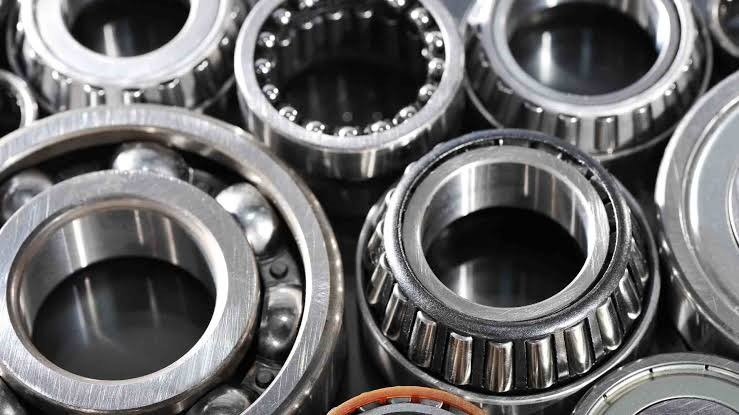
Ball bearings and roller bearings are two of the most common bearing types used in industrial machinery, vehicles, electric motors, gearboxes, pumps, conveyors, and rotating equipment. Both reduce friction between moving components and support shafts, but they do not distribute loads in the same way.
The fundamental difference is the shape of their rolling elements. Ball bearings use spherical balls, while roller bearings use cylindrical, tapered, spherical, or needle-shaped rollers. This difference affects load capacity, operating speed, friction, alignment tolerance, installation requirements, and expected service life.
Understanding the technical distinctions in the roller bearings vs ball bearings comparison is essential when selecting a replacement bearing or designing a mechanical system. Neither type is universally better. The correct choice depends on the load magnitude, load direction, rotational speed, available installation space, shaft alignment, and operating environment.
What Is a Ball Bearing?
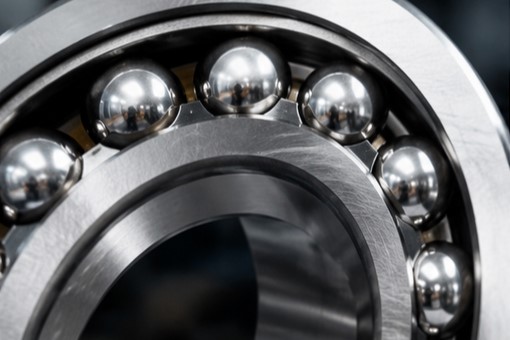
A ball bearing uses spherical rolling elements positioned between an inner ring and an outer ring. The balls travel along precision-machined raceways and are typically separated by a cage that maintains consistent spacing.
Because a ball touches each raceway across a relatively small contact area, ball bearings generate low rolling resistance. This point-contact design makes them suitable for high rotational speeds and applications where low friction, quiet operation, and limited heat generation are important.
Deep-groove ball bearings are the most widely used type. They primarily support radial loads but can also handle moderate axial loads in both directions. Other designs, such as angular-contact and thrust ball bearings, are optimized for different combinations of radial and axial forces.
Ball bearings are frequently used in electric motors, fans, pumps, household appliances, machine tools, automotive components, and light-to-medium industrial machinery.
What Is a Roller Bearing?
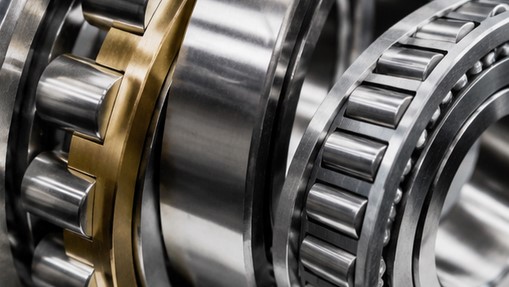
A roller bearing replaces spherical balls with rollers. Depending on the bearing design, these rolling elements may be cylindrical, tapered, barrel-shaped, spherical, or extremely thin and long.
Rollers create a line-contact area with the raceways rather than the small point contact produced by balls. This larger contact zone distributes forces across a wider surface, allowing roller bearings to carry heavier radial or combined loads.
Different roller geometries provide different performance characteristics. Cylindrical roller bearings offer high radial-load capacity. Tapered roller bearings support combined radial and axial loads. Spherical roller bearings can tolerate heavy loads and angular misalignment. Needle roller bearings provide substantial radial capacity where installation space is limited.
Roller bearings are commonly found in gearboxes, construction equipment, crushers, conveyors, railway systems, mining machinery, wind turbines, and other heavy-duty industrial applications.
The Main Difference: Point Contact vs Line Contact
The most important technical distinction between the two bearing families is how the rolling elements contact their raceways.
A ball creates an elliptical point-contact area. Under load, this small contact zone deforms slightly and transfers the force to the inner and outer rings. The limited contact area reduces friction and allows high-speed operation, but it also restricts the maximum load the bearing can safely support.
A roller produces line contact along a larger section of the raceway. This distributes the applied force over a wider area, reducing contact stress under heavy loads. Consequently, a roller bearing of a comparable external size can generally support more radial load than a ball bearing.
However, the larger contact area may generate more friction and heat. Roller bearings can therefore have lower speed limits than comparable ball bearings, depending on their internal design, lubrication, cage, and operating conditions.
Roller Bearings vs Ball Bearings at a Glance
The main differences can be summarized as follows:
- Rolling elements: Ball bearings use spheres, while roller bearings use cylindrical, tapered, spherical, or needle-shaped elements.
- Contact pattern: Balls create point contact; rollers produce line contact.
- Load capacity: Roller bearings generally support heavier radial loads than similarly sized ball bearings.
- Operating speed: Ball bearings are usually better suited to higher rotational speeds.
- Friction: Ball bearings commonly produce less rolling friction and lower heat.
- Misalignment: Standard ball and cylindrical roller bearings require accurate alignment, while spherical roller bearings are specifically designed to accommodate misalignment.
- Space requirements: Needle roller bearings provide high radial capacity in compact radial spaces.
- Cost and complexity: Standard ball bearings are often simpler and more economical, while specialized roller bearings may require more precise mounting and higher initial investment.
Load Capacity
Load capacity is one of the primary factors when comparing roller bearings and ball bearings.
Ball bearings perform well under light and moderate radial loads. Deep-groove designs can also support moderate axial forces, making them practical for general-purpose machinery. Their capacity may be sufficient for electric motors, small pumps, fans, and precision equipment.
Roller bearings are generally selected when radial loads become heavier. Their line-contact geometry spreads force across a greater surface area and reduces localized stress. This advantage is particularly important in steel mills, mining machinery, industrial gearboxes, crushers, and large conveyor systems.
The bearing dimensions alone do not determine its true capacity. Internal geometry, roller length, number of rolling elements, material quality, clearance, lubrication, and manufacturer specifications must also be considered.
Radial and Axial Load Performance
Radial loads act perpendicular to the shaft axis, while axial loads act parallel to it. Many applications generate both simultaneously.
Deep-groove ball bearings can handle radial loads and moderate axial loads in either direction. Angular-contact ball bearings are more suitable when higher axial forces are present, especially at high speed. Thrust ball bearings are designed mainly for axial loading and generally should not be expected to support significant radial force.
The axial capability of roller bearings varies considerably by design. Cylindrical roller bearings primarily support radial loads, although certain configurations provide limited axial guidance. Tapered roller bearings are highly effective under combined radial and axial loading. Spherical roller bearings provide heavy radial capacity while also supporting axial forces and compensating for alignment errors.
As a result, the term “roller bearing” does not define one universal performance profile. The specific roller geometry and internal construction must be evaluated.
Speed and Friction
Ball bearings typically have an advantage in high-speed machinery. Their small contact zones create relatively low rolling resistance, reducing heat generation at higher rotational speeds.
This characteristic makes ball bearings common in electric motors, spindles, fans, small turbines, and precision equipment. However, their actual speed capability depends on lubrication, cage material, preload, internal clearance, seal design, operating temperature, and accuracy class.
Roller bearings can also operate at high speeds, but their larger contact areas and more complex roller guidance may create additional friction. Heavy loads further increase the heat generated inside the bearing. Proper lubrication and thermal management are therefore critical.
A bearing should never be selected solely because one general category is considered faster. The limiting speed specified by the manufacturer must be checked for the exact bearing designation and operating conditions.
Misalignment Capability
Shaft deflection, housing deformation, and installation errors can create angular misalignment between the inner and outer rings.
Standard deep-groove ball bearings and cylindrical roller bearings have limited tolerance for misalignment. Excessive angular error concentrates stress on certain parts of the raceway, increasing vibration, heat, and premature fatigue.
Self-aligning ball bearings and spherical roller bearings are designed to address this problem. A self-aligning ball bearing is suitable for relatively light loads and higher speeds, while a spherical roller bearing is typically chosen for heavier industrial loading.
For applications such as conveyors, crushers, paper-processing machines, and heavy rotating shafts, spherical roller bearings often provide a practical balance of load capacity and misalignment compensation.
Durability and Service Life
Roller bearings frequently provide better durability under heavy loading because forces are distributed across larger contact areas. This does not mean they automatically last longer in every application.
A roller bearing installed in a lightly loaded, high-speed motor may generate unnecessary friction or operate below its optimal load range. Conversely, a standard ball bearing exposed to severe radial loading may develop raceway fatigue earlier than a properly selected roller bearing.
Bearing life depends on the relationship between applied load and dynamic load rating. It is also influenced by contamination, lubrication quality, mounting accuracy, operating temperature, vibration, corrosion, and material fatigue.
Correct selection and maintenance usually have a greater effect on service life than simply choosing between balls and rollers.
Size and Installation Space
Available installation space can significantly influence bearing selection.
Standard ball bearings provide a compact and versatile solution for many general-purpose applications. They are available in numerous diameter and width series, making them relatively easy to integrate into existing machinery.
Roller bearings may require more axial or radial space, depending on their design. Needle roller bearings are an important exception. Their long, thin rollers provide high radial-load capacity despite a very small cross-sectional height. They are widely used in transmissions, compressors, automotive components, and compact mechanical assemblies.
When installation space is restricted, engineers must compare not only external dimensions but also load capacity, shaft rigidity, lubrication access, and mounting requirements.
Noise and Vibration
Ball bearings are often preferred in applications where low noise and smooth rotation are essential. High-quality balls and accurately finished raceways can produce very stable motion, especially under moderate loads and high speeds.
Roller bearings may generate more operational noise due to their larger contact areas and roller movement. However, modern precision roller bearings can still operate smoothly when correctly mounted and lubricated.
Abnormal noise in either bearing type is not necessarily an inherent design characteristic. It may indicate contamination, inadequate lubrication, incorrect clearance, damaged raceways, poor alignment, or improper installation.
Installation and Maintenance Requirements
Ball bearings are often easier to mount in standard applications, especially when they are supplied as sealed or shielded units with factory-applied grease. These configurations can reduce maintenance requirements and protect the rolling elements from contamination.
Roller bearing installation may require more attention to axial positioning, internal clearance, preload, and ring alignment. Tapered roller bearings are often mounted in pairs and require controlled adjustment. Spherical roller bearings may use tapered bores, adapter sleeves, or withdrawal sleeves, requiring specialized mounting procedures.
In both cases, force must never be transmitted through the rolling elements during installation. When fitting an inner ring onto a shaft, installation force should be applied directly to that ring. When pressing an outer ring into a housing, the force must be directed to the outer ring.
Typical Applications
Ball bearings are generally suitable for applications that combine moderate loads with high speed, low friction, compact dimensions, and smooth operation. Common examples include electric motors, fans, pumps, household appliances, alternators, small gearboxes, office equipment, and precision machinery.
Roller bearings are normally preferred for machinery exposed to heavy radial loading, impact, shaft deflection, or demanding industrial conditions. Typical examples include mining equipment, large gearboxes, rolling mills, railway axle systems, construction machinery, crushers, wind turbines, and material-handling systems.
Application examples are useful starting points, but they do not replace technical calculations. Two similar machines may require different bearings because of variations in speed, load direction, housing design, temperature, and maintenance conditions.
Advantages and Limitations
Each bearing family has particular strengths and limitations:
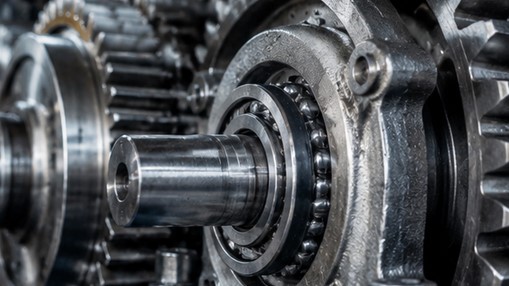
- Ball bearings: Usually offer low friction, high-speed performance, smooth rotation, compact construction, and support for moderate combined loads. Their primary limitation is lower heavy-load capacity compared with similarly sized roller bearings.
- Roller bearings: Generally provide higher radial-load capacity, better performance under heavy-duty conditions, and multiple designs for specialized requirements. Their limitations may include greater friction, more complex installation, and lower maximum speed in comparable configurations.
How to Choose Between Roller Bearings and Ball Bearings
Begin by determining the magnitude and direction of the applied forces. A moderate radial load combined with high speed often favors a ball bearing. A heavy radial load usually points toward a roller bearing.
Next, assess axial loading. Deep-groove and angular-contact ball bearings can support axial forces, while tapered roller bearings are commonly selected for heavy combined loads. If misalignment is expected, compare self-aligning ball bearings with spherical roller bearings according to the required load capacity.
Operating speed, available space, lubrication method, temperature, contamination, installation process, maintenance access, and total cost of ownership must also be reviewed. The least expensive bearing at the time of purchase may become the most expensive option if it requires frequent replacement or causes machine downtime.
Always verify the manufacturer’s technical data, including dynamic and static load ratings, reference speed, limiting speed, internal clearance, precision class, dimensional tolerances, and lubrication recommendations.
Can Ball Bearings and Roller Bearings Be Interchanged?
Ball and roller bearings should not be considered directly interchangeable merely because their bore, outer diameter, and width are similar.
Replacing a ball bearing with a roller bearing can alter friction, heat generation, axial movement, stiffness, minimum-load requirements, and shaft-location behavior. Replacing a roller bearing with a ball bearing may reduce load capacity and shorten service life.
Any substitution must be verified against the machine’s loads, speed, housing dimensions, shaft fit, lubrication system, and axial-location arrangement. In critical equipment, the replacement should be reviewed by a bearing specialist or mechanical engineer.
How Almabearings Can Help
Selecting the correct bearing requires more than matching a reference number. The operating conditions must be analyzed to determine whether a ball bearing or roller bearing provides the appropriate balance of load capacity, speed, friction, and durability.
Almabearings can assist industrial buyers, maintenance teams, and equipment operators in identifying suitable bearing types based on machine specifications and working conditions. Providing the existing bearing designation, shaft and housing dimensions, speed, load direction, temperature, and equipment model can significantly improve the accuracy of the selection process.
Sourcing from a reliable supplier also reduces the risk of receiving counterfeit, incorrectly stored, or unsuitable components.
Products: Deep Groove Ball Bearings
Conclusion
The central difference in the roller bearings vs ball bearings comparison is the contact geometry. Ball bearings use spherical rolling elements that create point contact, resulting in low friction and strong high-speed performance. Roller bearings create line contact, allowing them to distribute forces more effectively and support heavier loads.
Ball bearings are generally ideal for high-speed applications with light-to-moderate loads. Roller bearings are typically more suitable for heavy industrial loading, impact, and demanding operating conditions. However, the final decision must account for the specific bearing design, load direction, speed, alignment, lubrication, available space, and environmental conditions.
Choosing the correct bearing type improves machine reliability, reduces energy losses, and helps prevent premature equipment failure.
Frequently Asked Questions
1. Are roller bearings stronger than ball bearings?
Roller bearings generally carry heavier radial loads because their rolling elements create a larger contact area with the raceways. Actual capacity depends on bearing dimensions, internal design, material, and manufacturer ratings.
2. Which bearing type is better for high speeds?
Ball bearings are usually preferred for higher rotational speeds because they generate less rolling friction. The exact speed limit must still be confirmed in the manufacturer’s technical catalog.
3. Can ball bearings support axial loads?
Yes. Deep-groove ball bearings can support moderate axial loads, while angular-contact and thrust ball bearings are designed for applications with more significant axial forces.
4. Which bearing is better for heavy machinery?
Roller bearings are commonly preferred for heavy machinery. Cylindrical, tapered, and spherical roller bearings provide different combinations of radial capacity, axial support, and misalignment tolerance.
5. Do roller bearings last longer than ball bearings?
Not necessarily. A correctly selected bearing lasts longer than an unsuitable one. Service life depends on load, speed, lubrication, alignment, contamination, temperature, mounting quality, and maintenance.
6. Are roller bearings more expensive?
Specialized roller bearings are often more expensive than standard ball bearings of comparable size. However, their higher load capacity and longer service life in heavy-duty applications may reduce the total operating cost.