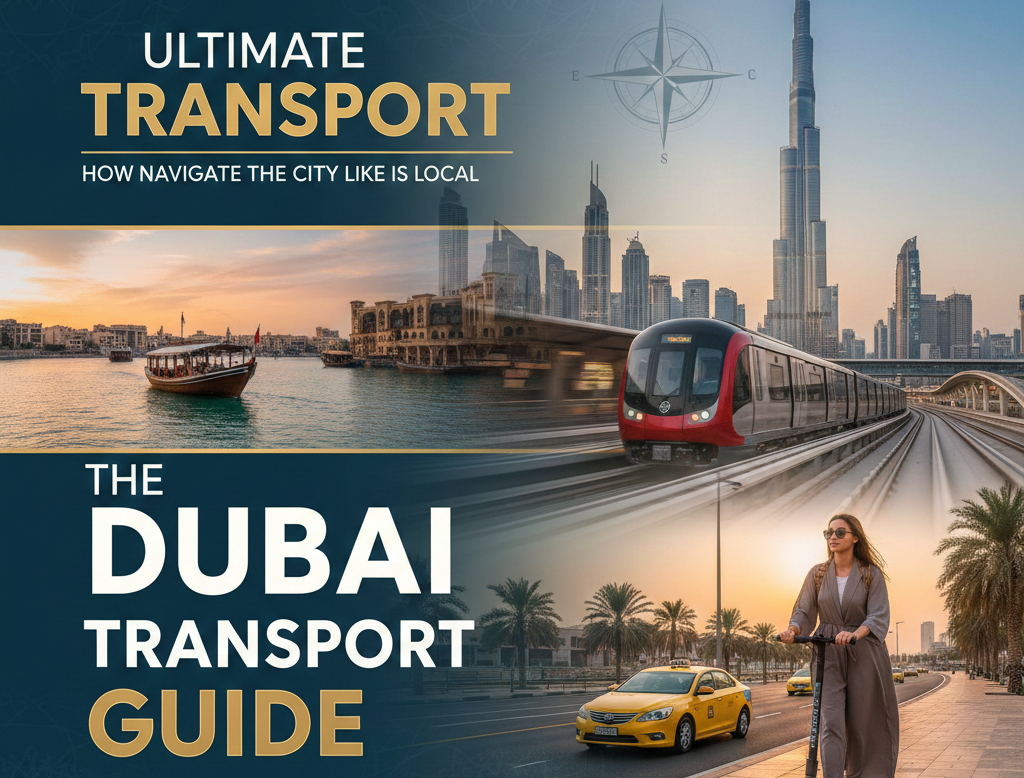
The Ultimate Dubai Transport Guide: How to Navigate the City Like a Local
Dubai is a city evolving at lightning speed, transforming from a desert port into a sprawling global metropolis with a skyline that defies gravity. Its transportation network, managed by the Roads and Transport Authority (RTA), is world-renowned for being futuristic, spotless, and incredibly efficient. Whether you are a resident looking for speed to reach your office in the DIFC or a tourist seeking a mix of luxury and budget-friendly options to explore the Palm Jumeirah, Dubai’s multi-modal system has it all. Mastering this network is the absolute key to saving time, avoiding the intense midday heat, and keeping your travel budget intact in this high-energy, fast-paced city.
1. Dubai Metro: A Masterclass in Engineering and Speed
The Dubai Metro isn’t just a convenient way to get around; it’s a symbol of the city’s ambition and holds the record as the world’s longest fully automated driverless rail network. It serves as the primary artery of the city, keeping millions of passengers moving with Swiss-watch precision across two main lines.
The Red Line: This is the lifeline of Dubai, tracing the city’s growth. Stretching over 52 kilometers, it runs from Dubai International Airport (Terminals 1 & 3) all the way to Expo City 2020. It follows the iconic Sheikh Zayed Road, providing passengers with front-row seats to architectural wonders like the Museum of the Future and the Burj Khalifa. Most stations are architectural marvels themselves, designed like giant golden shells. They are connected to major hubs by long, air-conditioned “link bridges” equipped with travelators, ensuring a “cool” transition from the train to the mall or office without ever facing the desert humidity.
The Green Line: This line is your gateway to the soul of “Old Dubai.” It loops around the historic districts of Deira and Bur Dubai, where the city’s trading roots began. If you want to explore the vibrant Gold and Spice Souks, or visit the Al Fahidi Historical Neighborhood to see traditional wind-tower architecture, this line is your best bet. Major interchange hubs like “Union” and “BurJuman” are engineering feats, allowing you to switch between the Red and Green lines seamlessly within a single, multi-level underground station.
Special Cabins & The Premium Experience:
- Gold Class: Located at one end of the train (offering the best view of the tracks), this cabin features plush leather seating, extra legroom, and a quieter environment. You need a Gold Nol Card to enter. During rush hour, the extra privacy and guaranteed space are well worth the premium fare.
- Women & Children Cabin: Clearly demarcated with pink floor stickers, signage, and overhead banners, these cabins provide a comfortable and safe environment specifically for female travelers and young children. The RTA strictly enforces this; male passengers entering this zone face an immediate fine of 100 AED.
- Silver Class: Even the standard cabin is surprisingly high-end compared to global standards. It features full-strength air conditioning, digital route maps, and dedicated, low-clearance spaces for “People of Determination” (passengers with disabilities).
2. Taxis & Ride-Hailing: 24/7 Smart Mobility
Taxis in Dubai are ubiquitous, highly regulated, and relatively affordable compared to other major global hubs. The fleet is modern, primarily consisting of hybrid vehicles, reflecting Dubai’s commitment to sustainability.
Public Taxis: You can easily hail these on the street, book them via the S’hail app, or find them at massive, well-organized taxi ranks in every mall. They operate on a strictly metered system, with base fares that vary slightly depending on the time of day or if you’re starting from the airport. The roof color indicates the franchise (e.g., Red for Dubai Taxi, Yellow for National Taxi), but the service standards and pricing remain identical across the board.
Smart Apps & Digital Transformation:
- Hala Taxi: This is the smartest way to utilize the public fleet. By using the Careem app to book a “Hala” taxi, you get the government-regulated meter rate but with the modern convenience of e-payment, driver ratings, and precise GPS tracking of your ride’s arrival.
- Uber & Careem Premium: For those who prefer a more personalized or luxurious experience, these apps offer a fleet of high-end, unmarked black vehicles, typically Lexus or Tesla. These are ideal for business executives or tourists wanting a fixed-price guarantee that remains unaffected by unexpected traffic delays.
3. Bus Network: Maximum Coverage for Budget Travelers
While the Metro covers the main spine of the city, the RTA bus network acts as the capillaries, reaching deep into the residential, industrial, and suburban sectors that the rail lines don’t yet touch.
- High-Tech Infrastructure: To combat the desert climate, Dubai pioneered the world’s first fully enclosed, air-conditioned bus shelters. These shelters are vital during the peak summer months. Inside, real-time digital displays integrated with the S’hail app provide live updates, ensuring you don’t spend a second more than necessary outside.
- Intercity Connectivity: These buses are the most cost-effective way to travel between Emirates. For a modest fare of 25-30 AED, you can board a high-spec coach from Al Ghubaiba or Union station. These coaches feature reclining seats, dedicated luggage compartments, and often include free Wi-Fi, making the commute to Abu Dhabi or Sharjah comfortable and productive.
4. Tram & Monorail: Coastal and Luxury Connectivity
Dubai Tram: Operating in the glitzy coastal stretch of Dubai Marina and Jumeirah Beach Residence (JBR), the tram is a marvel of urban planning. It is the first tram system in the world to use ground-level power supply, eliminating unsightly overhead wires. It’s perfectly synchronized with the Metro at “Damac Properties” and “DMCC” stations, providing a vital link for residents in the skyscraper-dense Marina area.
Palm Monorail: This private rail line serves the iconic Palm Jumeirah. It runs from the “Gateway” station to the “Atlantis Aquaventure” station. Beyond transport, it is a scenic tour in itself, offering unparalleled views of the Nakheel Mall, the crescent of the Palm, and the luxury villas that line the fronds.
5. Marine Transport: Where Heritage Meets the Future
Dubai’s relationship with the water is deeply historical, and the RTA has successfully modernized traditional modes into functional, scenic transport options.
Abra (The Heritage Choice): These motorized wooden boats carry up to 20 people across the Dubai Creek. For a symbolic 1 AED, paid in cash to the driver, you can cross between the bustling souks of Deira and Bur Dubai. It is a sensory experience—the smell of the salt air, the sound of the diesel engine, and the view of traditional dhows loading cargo provide a stark, beautiful contrast to the silent, high-tech Metro.
Dubai Ferry & Water Taxi: The Ferry serves as a “cruise for commuters,” offering a relaxing way to see the city skyline from the Arabian Gulf. It connects major points like the Marina, the Dubai Canal, and the historic district. Water Taxis offer a more bespoke experience; they can be booked on-demand to pick you up from private docks at luxury hotels like the Burj Al Arab or the Jumeirah Zabeel Saray.
6. The Nol Card: Your Universal Golden Ticket
In Dubai’s public transport ecosystem, cash is essentially obsolete for everything except the traditional Abras. The Nol Card is your unified payment method for the Metro, buses, tram, and even government-operated parking meters.
Silver Card: The most popular choice for residents and frequent visitors. It costs 25 AED (which includes 19 AED of usable credit) and is valid for 5 years. It’s the most economical way to pay for individual trips, automatically calculating the best fare based on the zones you travel through.
Gold Card: Designed for those who want to use the Gold Class cabins. It functions just like the silver card but is programmed to deduct the higher premium fare when you tap in at the gates.
Red Ticket: Ideal for short-term tourists or one-off journeys. This paper-based ticket can be loaded with up to 10 single trips or 5 daily passes, making it perfect for someone spending just 24 hours in the city.
Traffic, Roads, and the “Salik” System
Dubai is a driver’s city, boasting world-class multi-lane highways and sophisticated traffic management systems, though rapid growth has brought significant peak-hour congestion.
- Salik (Electronic Toll): To keep traffic flowing, Dubai uses a completely gateless electronic toll system called “Salik.” RFID tags on vehicle windshields are scanned as they pass under sensors on major arteries like Sheikh Zayed Road. Each crossing costs 4 AED. If you are in a taxi, the meter will automatically add this charge to your final total, so don’t be surprised by the slight jump in the fare.
- Navigating Peak Hours: Traffic is heaviest during the morning commute (7:00 AM – 9:30 AM) and the evening return (5:00 PM – 8:00 PM), especially on routes connecting Dubai to Sharjah. During these windows, a drive that usually takes 20 minutes can easily turn into 90. Pro tip: If your destination is near a station, the Metro is consistently faster than any car during these “rush hours.”
Essential Rules, Etiquette & Fines
Dubai takes the maintenance of its public spaces very seriously. To ensure a clean and orderly environment, strict etiquette rules are enforced by both technology and undercover RTA inspectors.
Zero Tolerance for Mess: Eating, drinking (even water), or chewing gum inside Metro cabins, buses, or trams carries a 100 AED fine. This strictness is the reason why the stations look as pristine today as they did when they first opened in 2009.
Respecting the “Zones”: Standing in the Women & Children area as a male passenger, or sitting in the Gold Class cabin with a Silver Card, will result in an immediate fine. Inspectors frequently board trains to check cards, so always ensure you are in the correct section.
Priority Seating: Culture in Dubai places a high value on respect. Always give up your seat for the elderly, pregnant women, or “People of Determination.” While it is common courtesy, failing to do so in designated seats can lead to a reprimand or fine.
Frequently Asked Questions (FAQ)
Can one Nol Card be used for multiple people? No. Every passenger must tap in and out with their own card. This is because fares are distance-based, and the system needs to track each individual’s entry and exit point to calculate the correct fare.
How much does a typical Metro trip cost? Fares are calculated by “zones.” A short trip within a single zone is 3 AED, while a cross-city trip spanning more than two zones is 7.5 AED for Silver Card holders.
Is the Metro open 24 hours? No. Generally, it runs from 5:00 AM to midnight (Monday-Thursday), until 1:00 AM on Fridays, and starts later on Sunday mornings. It’s always best to check the live schedule on the S’hail app.
What is the “S’hail” App? This is the official RTA app and is essential for any traveler. It allows you to plan multi-modal journeys (e.g., bus to metro to tram), check your Nol balance, and see live arrival times for all transport modes.
Can I pay for taxis with a Credit Card? Yes, the vast majority of RTA taxis accept Visa, Mastercard, and Apple Pay. You can even use your Nol Card credit to pay for your taxi fare in many vehicles!
Final Conclusion
Navigating Dubai is a seamless and often awe-inspiring experience once you understand the rhythm of the city. The system is a perfect blend of high-tech automation and traditional maritime charm. For the most efficient experience, download the S’hail app, keep a Silver Nol Card topped up, and don’t be afraid to mix and match transport modes. Whether you are zipping between skyscrapers on the world’s most advanced Metro or taking a slow, 1-dirham Abra ride across the Creek at sunset, Dubai’s transport system is designed to make every journey as impressive as the city itself.