Sharjah Residency 2025: The Cheapest UAE Gateway & Golden Visa Guide
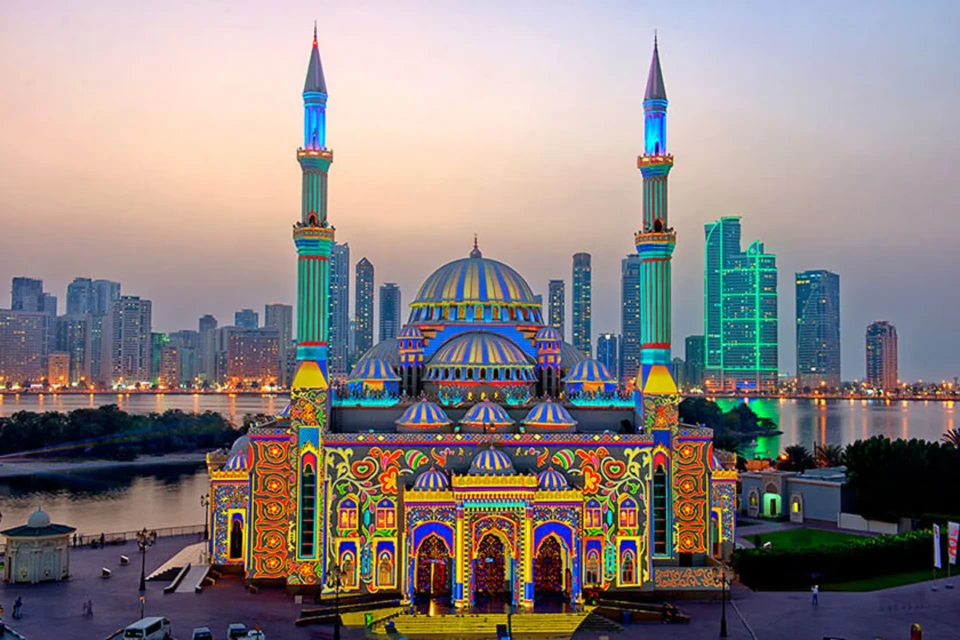
Are you dreaming of living in the UAE but find Dubai’s high costs a major deterrent? Sharjah, the Cultural Capital of the Emirates and the third-largest emirate, is the smart and economic answer. Sharjah offers modern facilities and excellent infrastructure at costs significantly lower than Dubai, while maintaining an authentic and traditional atmosphere. Residency in Sharjah not only reduces your rent and living expenses by up to 40% but also provides a family-friendly, secure, and authentic environment.
Why Sharjah? 7 Strategic Reasons to Choose the Cultural Capital of the Emirates
Choosing Sharjah is not just an economic decision; it is a strategic choice for life, work, and investment:
Economical and Affordable Living Costs:
Apartment rents in Sharjah are, on average, 35% to 45% cheaper than in comparable areas in Dubai. This difference in daily expenses and services also benefits Sharjah residents. With the rent money for a small studio in Dubai, you can rent a luxurious one or two-bedroom apartment in Sharjah and save a significant portion of your income.
Lowest Cost for Company Registration and Trade License:
Sharjah Free Zones (especially Shams and SPC) offer some of the most affordable trade license packages in the entire UAE, presenting a golden opportunity for freelancers, startups, and small businesses to enter the Middle East market with minimal initial capital.
Strategic Location and Easy Access:
Sharjah is virtually the northern gateway to Dubai. The distance from central Sharjah to Dubai International Airport (DXB) and the Dubai Mall is less than 30 minutes. Many employees work in Dubai and live in Sharjah to benefit from the low cost of residency. Sharjah also has its own international airport and commercial ports.
Cultural, Religious, and Family-Friendly Environment:
Having been designated the Cultural Capital of the Islamic World and the World Book Capital, Sharjah provides an ideal environment for families, raising children, and those seeking tranquility and distance from excessive extravagance. Reputable schools and universities are established in this emirate.
100% Foreign Ownership:
The possibility of registering a company with 100% full ownership for foreign nationals (including Iranians) is available in Free Zones and parts of Mainland Sharjah, eliminating the need for a local Emirati sponsor or partner.
Strong Educational System:
The presence of prestigious higher education institutions such as the American University of Sharjah (AUS) and the University of Sharjah has made this region an educational hub.
High Security:
Like other Emirates, Sharjah enjoys a very high level of security, which is one of the most important advantages of living here.
Types of Sharjah Residence Permits and Details of Each Method (2025 Update)
For obtaining the Emirates ID card and legal residency through Sharjah, there are 5 main routes with specific details:
1. Residency through Company Formation (The Fastest and Most Economical Method)
Company formation is the most popular route for obtaining a 2-year residency visa. You can register a company in two types of zones:
A) Free Zones
Features: 100% ownership, full tax exemption, fast process, and no need to rent a physical office (Flexi Desk).
Key Zones:
Sharjah Media City (Shams): Focuses on media, e-commerce, and consulting services. The cheapest and fastest option for freelancers.
Sharjah Publishing City (SPC): Ideal for publishing, printing, trade, and services. License issuance in less than 48 hours.
Residency: Each license can be used to apply for a 2-year residency for one to three individuals (depending on the package purchased).
B) Company Registration in Mainland
Features: These companies can conduct commercial activities throughout the UAE and outside the Free Zones. Oversight is carried out by the Sharjah Economic Development Department (SEDD).
Advantages: Access to local markets, possibility of undertaking government projects.
Residency: Usually, a 2-year visa is issued.
2. Residency through Real Estate Investment in Sharjah (Golden Visa)
Sharjah’s property laws have gradually become more flexible for foreign investors. Foreign nationals can now purchase property with full ownership (Freehold) in designated areas (such as new projects like Aljada, Tilal City, and Mamsha).
2-Year Visa (Investor Residency): By purchasing property worth a minimum of 750,000 AED.
Golden Visa (10-Year): By purchasing one or more properties worth a minimum of 2,000,000 AED.
Sharjah Advantage: The price per square meter in Sharjah’s new projects is typically lower than in Dubai, making it easier to reach the 2 million AED threshold for the Golden Visa.
3. Employment Residency (Work Visa)
If you are employed in Sharjah, your employer is obliged to cover all costs related to your residency, visa, and health insurance.
Validity: Depends on the contract type (usually 2 years) and is renewable.
Key Condition: Having a specialization needed by the Sharjah market and verified educational credentials.
4. Student Residency
International students accepted into accredited institutions in Sharjah are eligible for a student visa.
Key Universities: American University of Sharjah (AUS) and University of Sharjah.
Validity: A one-year visa (renewable), which can be extended after graduation if pursuing further studies or securing employment.
5. Retirement Visa
Retirees with property assets or fixed capital can receive a 5-year retirement visa.
Cost of Living in Sharjah (In-Depth and Comparative Analysis)
Knowing the real costs is crucial for financial planning. These estimates are based on 2025 data:
Studio Rent (Popular Areas):
Average Cost: 15,000 to 25,000 AED annually.
Details: Areas like Al Majaz, Al Taawun, and Muwaileh are among the most popular neighborhoods.
1-Bedroom Apartment Rent:
Average Cost: 25,000 to 40,000 AED annually.
Details: Al Taawun and Al Majaz areas are usually more expensive due to their proximity to Dubai.
Electricity and Water Bill (SEWA):
Average Cost: 500 to 1,000 AED monthly.
Details: Consumption can double in the summer due to air conditioning (AC) usage.
Internet and Home Phone:
Average Cost: 380 to 450 AED monthly.
Details: Standard package including internet, TV, and landline from Etisalat or Du.
Transportation (Personal Car):
Average Cost: 1,000 to 1,500 AED monthly.
Details: This covers gasoline, insurance, and initial car installment (gasoline is very cheap in the UAE).
Grocery Shopping:
Average Cost: 1,500 to 2,500 AED monthly.
Details: For a family of 2. Sharjah has cheaper local markets compared to Dubai.
Nursery/Kindergarten Fees:
Average Cost: 1,500 to 2,500 AED monthly.
Details: On average, 20% cheaper than comparable nurseries in Dubai.
Crucial Note on Transportation:
Sharjah has a bus system but lacks a metro. Due to urban sprawl and the need to commute between Sharjah and Dubai, having a personal car (even an economical model) is almost essential.
Challenges and Specific Sharjah Regulations (Cultural Differences)
Life in Sharjah, while peaceful, requires adaptation to cultural laws that are stricter than in Dubai:
Heavy Daily Traffic:
The biggest challenge of living in Sharjah is the heavy congestion during peak hours. Major roads like E311 and E11 connecting Sharjah to Dubai face high traffic density in the morning and evening. You should budget about 1 to 2 hours of commute time for daily travel to Dubai.
Complete Ban on Alcohol Sales and Consumption:
Sharjah is the most conservative emirate in this regard. The sale and consumption of alcoholic beverages are banned in all hotels, restaurants, and public places in Sharjah. This law is an advantage for residents seeking an alcohol-free environment but a challenge for others.
Conservative Dress Code:
In public places in Sharjah, adhering to a conservative dress code (covered and modest attire) is taken more seriously, and tourists and residents are expected to respect cultural values.
Rent Cheques and Landlord-Tenant Laws:
Unlike Dubai, where monthly rent payments are now common, most landlords in Sharjah still insist on receiving rent in the form of 4 to 6 cheques (4 or 6-month cheques). There are strict laws regarding bounced cheques.
Frequently Asked Questions (FAQ) about Sharjah Residency and Expat Life
1. Can I live and work in Dubai or Abu Dhabi with a Sharjah visa?
Yes, the Emirates ID card issued by any of the emirates (including Sharjah) is valid throughout the UAE. You can work in Dubai and live in Sharjah.
2. What is the minimum capital required for company registration with residency?
For a standard Free Zone package (including initial visa and Emirates ID costs), the minimum initial capital starts from about 13,000 to 15,000 AED (around $4,000 USD). This amount varies depending on the license type and the number of visas required.
3. Is health insurance mandatory in Sharjah?
Yes, having health insurance is mandatory for all residents and those obtaining residency and is part of the visa issuance process. Insurance costs in Sharjah are usually slightly cheaper than in Dubai.
4. What is the family sponsorship process?
After obtaining your residency through company formation or employment, you can apply for a sponsorship visa for your spouse and dependent children. The key condition is proving financial capability (minimum monthly salary or declared income) and suitable housing.
5. Can I convert my home country’s driver’s license in Sharjah?
Yes, nationals of certain countries (listed as exempt from testing) can directly convert their driver’s license to an Emirati license. However, nationals of countries not on this list (most Asian countries) must complete the full testing stages (including training classes, theoretical, and practical tests) at Sharjah driving institutes.
6. What is the process for opening a bank account for Sharjah residents?
After receiving your Emirates ID card and Sharjah residence visa, you can open a personal account at all UAE banks (such as Emirates NBD, ADCB, etc.) by presenting your Emirates ID, passport, visa, and a No Objection Certificate (NOC) from your company (if necessary). The process is usually straightforward, but opening a corporate account has more steps.
7. Are the dress code and alcohol laws strictly enforced in Sharjah?
Yes. Sharjah enforces conservative dress codes and the alcohol ban more strictly than Dubai or Abu Dhabi. The sale and consumption of alcohol are completely forbidden. Furthermore, appropriate (modest) attire is expected in public places such as malls and government offices, although these rules are applied to tourists and residents with an understanding of the cultural context and mutual respect.
8. Are Sharjah companies subject to the new UAE Corporate Tax?
Yes. All companies (both Mainland and Free Zone) are subject to the 9% Corporate Tax law. However, Free Zones benefit from a “taxable income threshold” which grants exemption from the 9% tax up to a specific limit (usually 375,000 AED), provided their main activity is outside the UAE Mainland and they comply with the conditions of Article 9 of the Corporate Tax Law.
Conclusion
Sharjah offers a unique combination of affordability, cultural stability, and access to key UAE markets. This emirate is an excellent choice for families, students, and investors looking to start their economic activity and life in the UAE with lower initial costs and reduced risk.
It is recommended to consult with experienced legal and immigration advisors in the UAE before taking any action to stay informed about the latest regulatory changes.