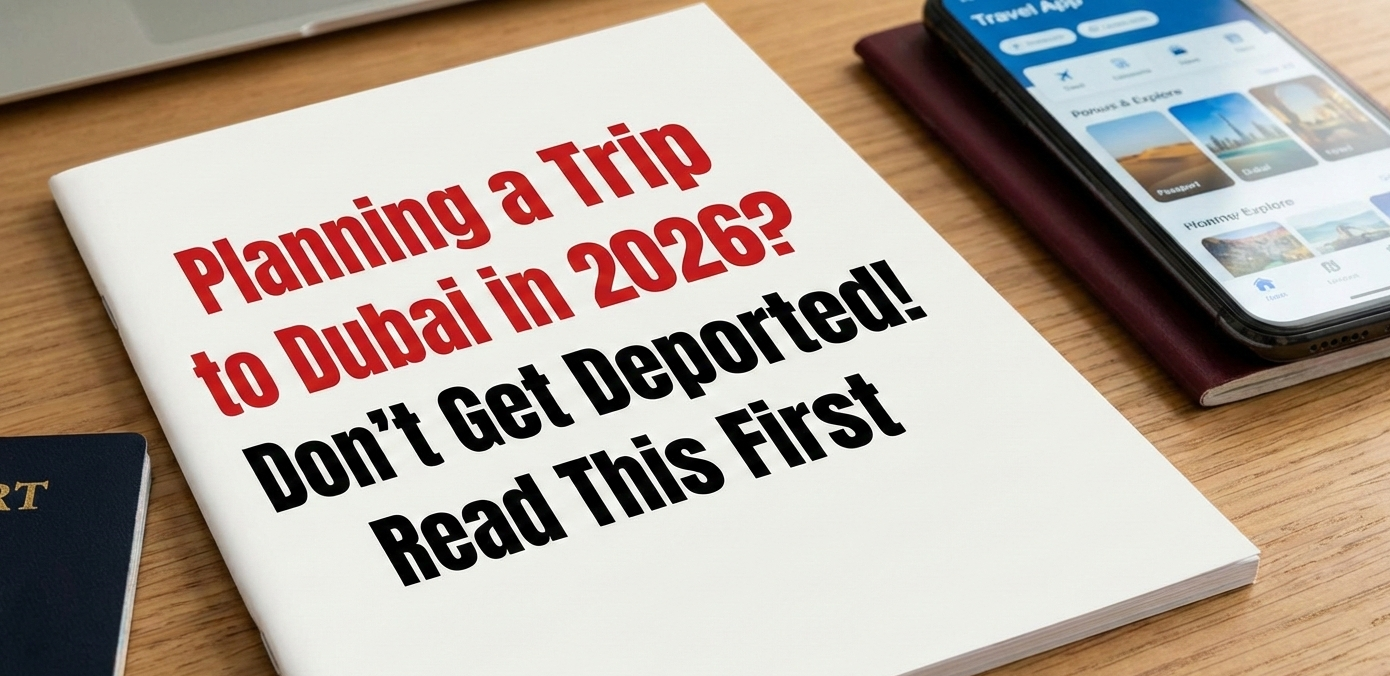
Planning a Trip to Dubai in 2026? Don’t Get Deported! Read This First
Dubai, the city of endless skyscrapers and the world’s most luxurious entertainment, has updated its entry and residency rules for 2026. This city, which has created a link between Arabic traditions and global modernity, has specific standards and protocols that ignoring them can cause serious challenges for your trip. If you plan to visit this pearl of the Persian Gulf as a tourist, this article is your comprehensive roadmap.
New Visa Rules, Passport Validity, and Financial Solvency (2026 Update)
The first step to touching the warm sands of Jumeirah Beach is crossing the visa barrier. In 2026, the UAE’s visa issuance system has become smarter:
Passport Validity: Your passport must be valid for at least 6 months from the date of entry. This is an unchangeable rule. If your passport validity is even one day less, the airline will not allow you to check in.
Types of Tourist Visas:
- Short-term Visa (30 days): Suitable for a quick leisure trip.
- Medium-term Visa (60 days): A new option designed for tourists who intend to explore all the Emirates.
- Long-term Visa (90 days): Usually used for family visits or searching for business opportunities.
- 5-Year Multi-Entry Visa: This visa allows tourists to stay for up to 90 days per entry. The main condition is providing a 6-month bank statement with a minimum balance of $4,000 (or equivalent in other currencies).
- Airport Financial Solvency Rule (AED 3,000 Rule): Immigration officers may ask you to prove you have the funds for your stay. Carrying AED 3,000 in cash, or a valid credit card, along with a confirmed hotel reservation (voucher) and a return ticket is mandatory. Failure to provide these documents can result in immediate deportation.
Red Lines in Your Suitcase: Blacklisted Medicines and Customs
Dubai follows a “Zero Tolerance” policy regarding drugs and certain medications. Many medications that are easily obtained from pharmacies in other countries may be considered “narcotics” in the UAE.
A) Medications (Crucial):
- Codeine-based Painkillers: Carrying even one strip of acetaminophen-codeine without a specialist’s prescription (translated) can lead to detention.
- Sedatives and Sleeping Pills: Medications like Diazepam, Alprazolam (Xanax), and most specific antidepressants must have a valid prescription stamped by the Ministry of Health.
- Addiction Treatment Drugs: Bringing Tramadol, Methadone, and Buprenorphine under any circumstances without specific prior medical authorization is a very serious crime.
- Advice: Always keep medications in their original packaging and do not carry more than for personal use for the duration of your stay.
B) Customs Rules and Prohibited Items:
- Cigarettes and Tobacco: Carrying more than 400 cigarettes or 2 kg of tobacco is prohibited.
- Alcohol: Non-Muslim tourists are allowed to carry a limited amount of alcohol (maximum 4 liters), but consumption is only allowed in licensed places (hotels and clubs).
- Cultural Goods: Any printed or digital content deemed offensive to Islamic values or the UAE government is prohibited.
- Flying Objects (Drones): Bringing drones and quadcopters without prior permission from the UAE General Civil Aviation Authority (GCAA) is prohibited and they will be confiscated at customs.
Conduct and Dress Codes: Respect Local Culture
Dubai is one of the most liberal cities in the region, but it remains an Islamic city with traditional frameworks.
Dress Code in Malls and Streets: Clothing should cover shoulders and knees. Wearing revealing or very short clothes in Shopping Malls can lead to warnings from security officers.
Beach Rules: Swimwear (bikinis/trunks) is strictly for hotel pools, water parks, or public beaches. Wearing swimwear on streets leading to the beach is prohibited.
Ramadan: If traveling during Ramadan, eating, drinking, and smoking in public during fasting hours is prohibited and carries a fine (though many hotels provide screened areas for tourists).
Public Displays of Affection (PDA): Intense romantic behavior in public (like kissing) is illegal. Shaking hands or a casual hug is accepted in most places, but do not overdo it.
Digital Rules, Cyber Security, and Photography
In Dubai, virtual space is as legally monitored as physical space.
VPN Usage: Using a VPN to access pornographic sites, gambling, or making blocked voice calls (like WhatsApp calls which are blocked in Dubai) is a crime. While many tourists use it, it carries heavy fines (up to AED 500,000) if used for criminal activities.
Photography: * Never take photos of local women or families without permission.
Photography of government buildings, embassies, airports, and military installations is strictly prohibited.
Social Media: Insulting religion, the flag, the UAE government, or even verbal altercations with individuals in comments can lead to legal complaints.
Health and Safety (Insurance and Legal Age)
Travel Insurance: Having travel insurance that covers medical expenses (including accidents and sudden illnesses) in the UAE is mandatory for visa issuance and entry.
Legal Age: The legal age for hotel reservations and administrative matters is 21. Individuals between 18 and 21 may face issues checking into some hotels unless accompanied by parents. Individuals under 18 are not allowed entry without a legal guardian under any circumstances.
Frequently Asked Questions (FAQ)
1. Is a COVID-19 vaccination card mandatory for entry in 2026?
No; currently, COVID-related restrictions have been lifted.
2. Will I definitely be deported if I don’t have AED 3,000?
This rule is mostly for those on questionable visas or budget airlines. However, customs officers have the right to demand this or a hotel voucher if suspicious.
3. Can unmarried couples stay in the same hotel room?
Yes; unlike years ago, unmarried couples or solo male and female tourists can easily book shared rooms in Dubai.
4. What is the penalty for carrying prohibited drugs?
Penalties range from confiscation and deportation to long-term imprisonment depending on the type and quantity.
5. Do WhatsApp voice and video calls work in Dubai?
No; VoIP calls are blocked. Use apps like BOTIM or Zoom, or use roaming.
6. How much is the “Tourism Dirham” tax?
Between AED 7 to 20 per night depending on the hotel’s star rating, paid at check-in.
7. What is the cheapest way to get around Dubai?
Using the Dubai Metro and a “Nol Card.” It covers most tourist spots and is much cheaper than taxis.
8. Can we shop with US Dollars in Dubai?
Many large stores accept Dollars, but the exchange rate is usually lower than at money exchanges.
9. Are E-cigarettes (Vapes) allowed in Dubai?
Yes, for personal use. However, using them in enclosed public spaces is prohibited.
10. What happens if our visa expires and we don’t leave?
A heavy daily fine is charged, and you may be blacklisted from the UAE.
Final Checklist Before Flying
Original Passport (6 months validity).
Printed Visa.
Financial Solvency (Min AED 3,000 or equivalent).
Doctor’s Prescription (for medications).
Insurance and Voucher.
Closing Statement:
Dubai is a city of order and respect for the law. Following these tips ensures a stress-free experience in the world’s most modern city.