Why Gulf Families Are Turning to Iran for Fertility Treatment and Surrogacy
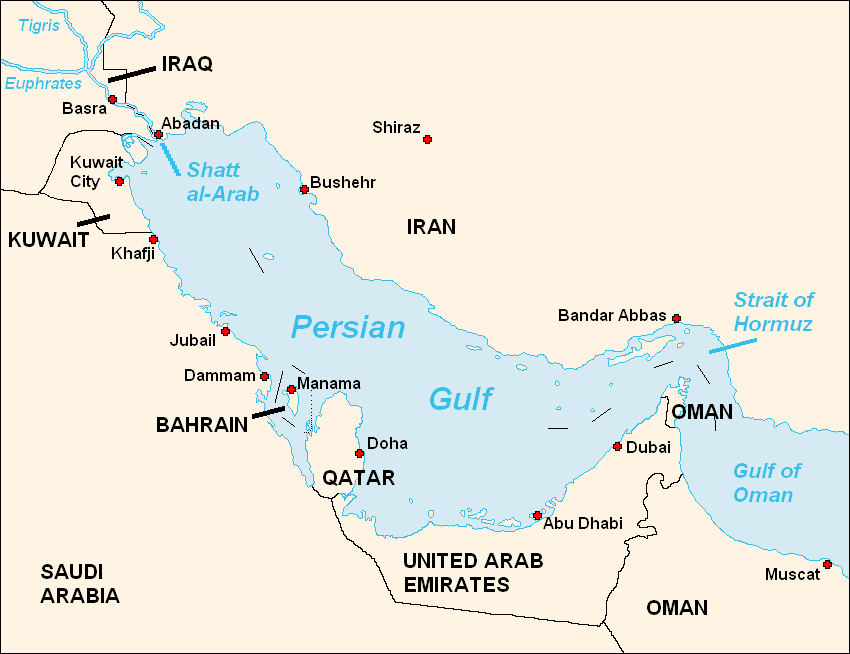
For many couples in the Gulf, the road to parenthood can be long and expensive. Fertility treatment in Europe or the United States often means high costs, long waitlists, and weeks away from home. That is why a growing number of families from the UAE, Qatar, Oman, and Kuwait are now looking closer to home — to Iran.
A Short Flight, Not a Long Journey
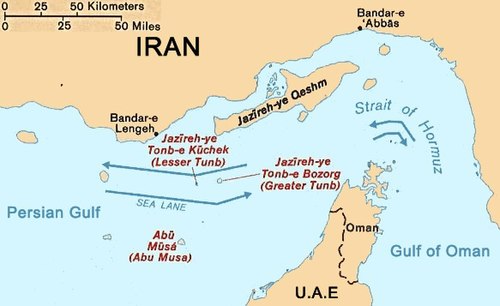
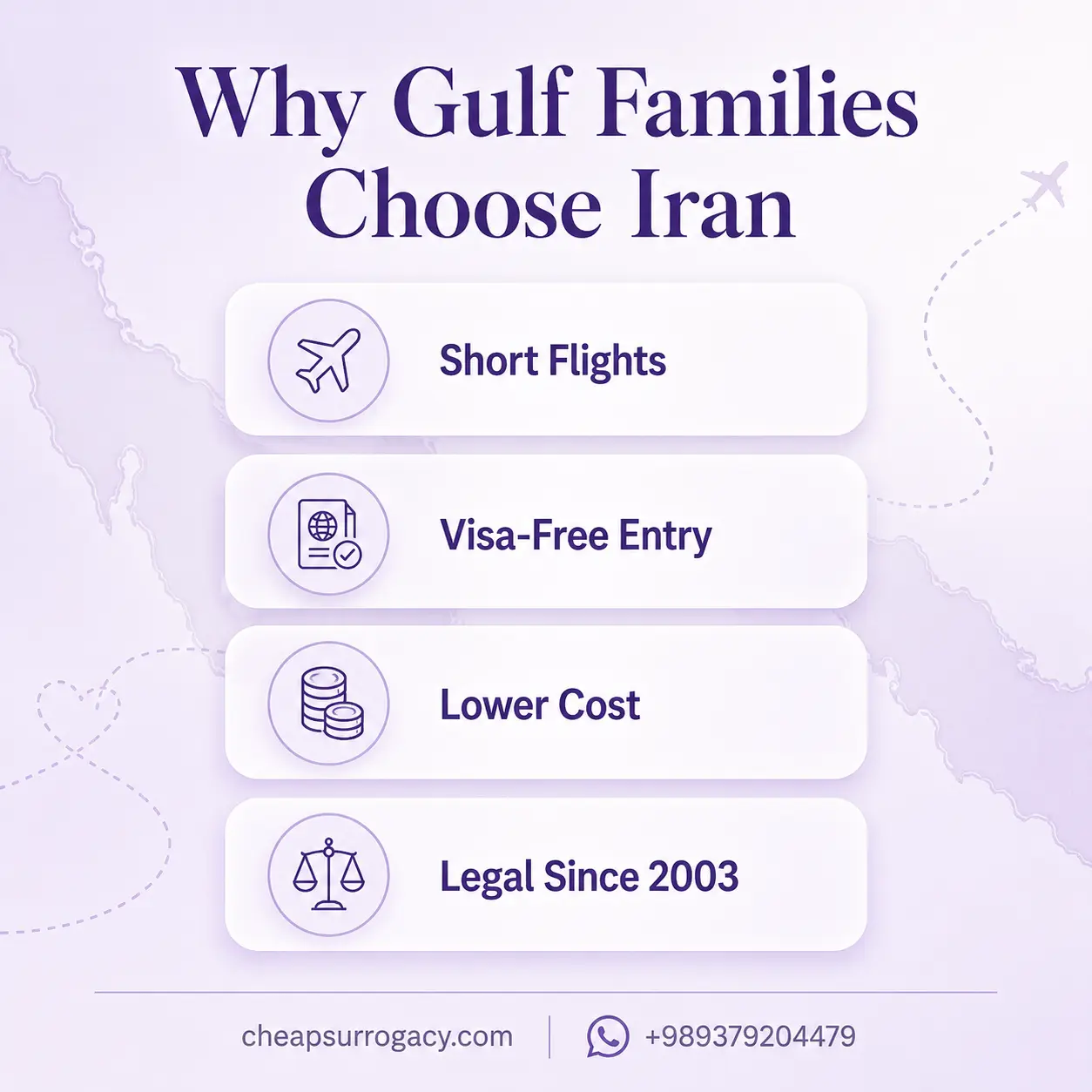
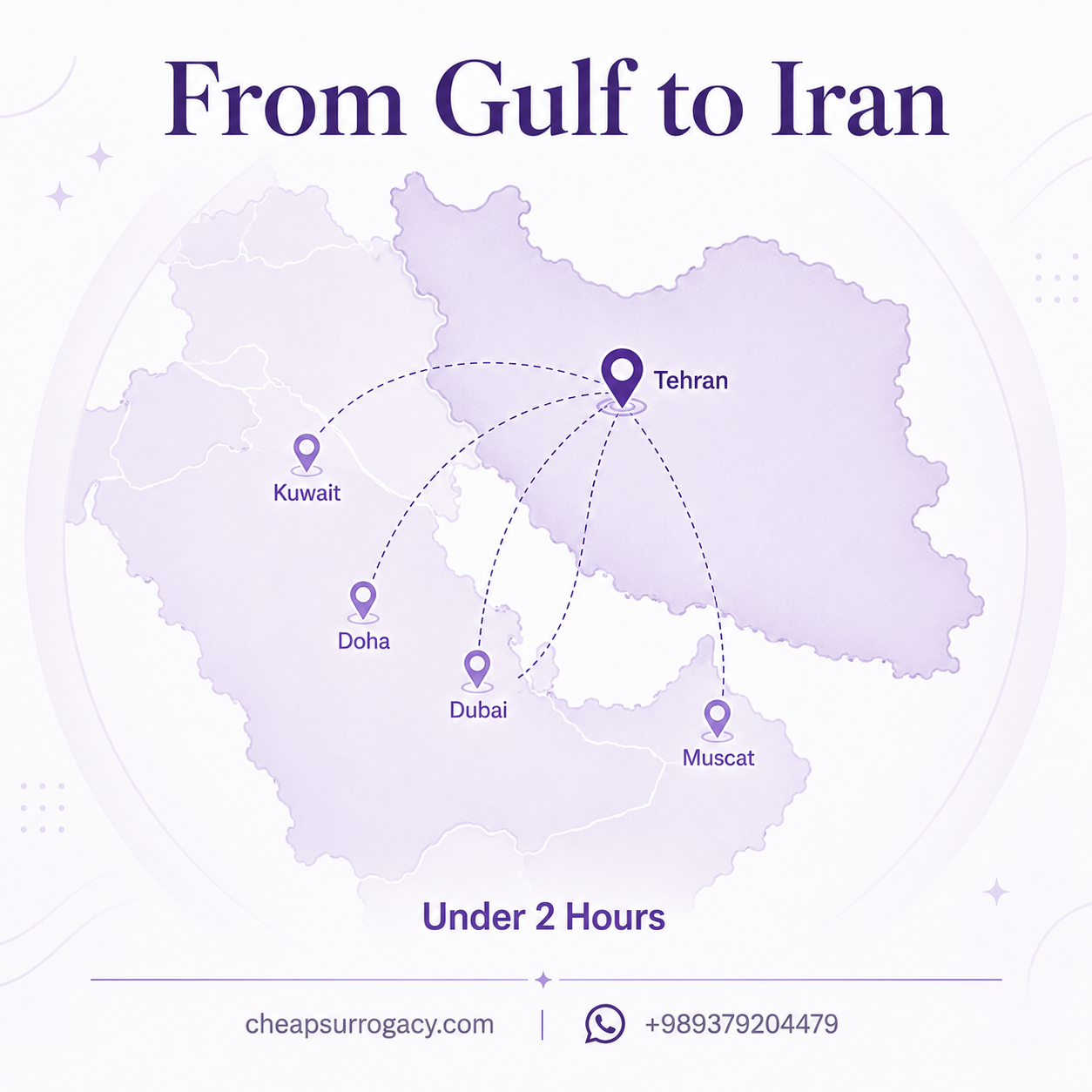
For families in Dubai, Doha, or Muscat, Europe and North America mean a flight of ten hours or more, plus jet lag and time off work. Iran is different. Direct flights from most Gulf cities to Tehran take under two hours.
This matters more than it might seem. Fertility treatment and surrogacy are not one-time trips. They often involve several visits over many months — consultations, medical tests, embryo transfer, and follow-up care. A short flight makes it possible to stay close to work and family while still moving the process forward.
Travel is also simpler than many people expect. Citizens of several countries in the region, along with a number of other nations, can currently enter Iran without needing a visa in advance. Since travel rules can change, it is always worth checking the latest requirements for your nationality before booking a trip.
The Cost Difference Is Hard to Ignore
Cost is often the first thing that stops people from starting fertility treatment. In the United States, a full surrogacy journey can run past $100,000 once medical care, agency fees, and legal costs are added up. For many families, that number alone puts the option out of reach.
Clinical and operational costs in Iran are considerably lower, which is reflected in program pricing. This does not mean lower quality care — Iran’s fertility clinics use modern IVF technology, and many specialists have trained internationally. It simply means the overall structure of the healthcare system allows providers to offer treatment at a lower price point than clinics in Western countries.
For families who have already looked into options abroad and found the numbers unworkable, this cost difference is often the reason Iran ends up back on the list.
What the Process Actually Involves
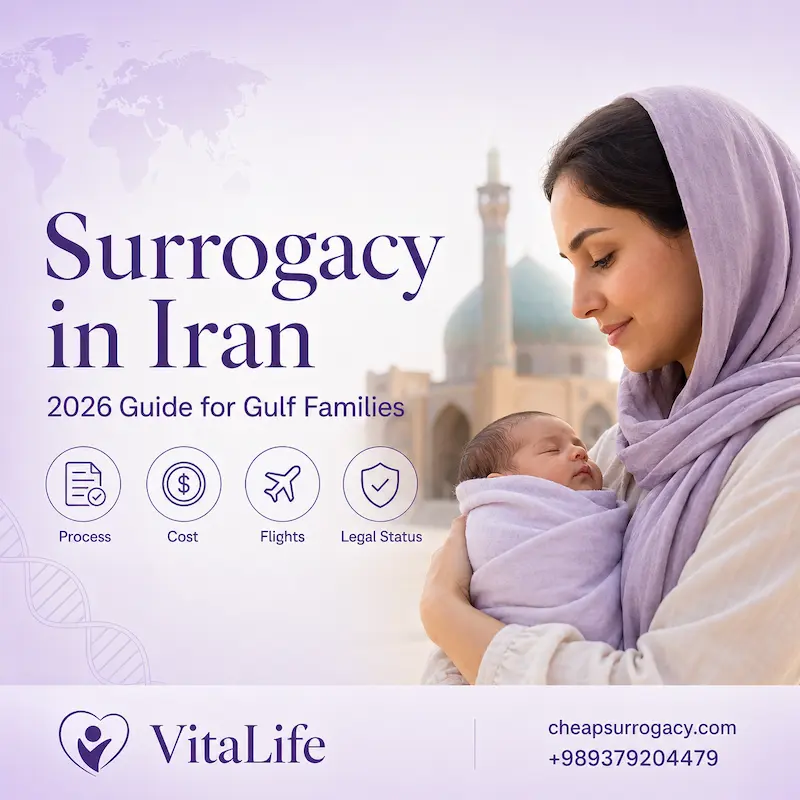
Surrogacy in Iran operates within a specific legal framework. Iranian law has recognized and regulated surrogacy since 2003, and the process is generally available to legally married heterosexual couples who can show a medical need — such as infertility or a health condition that makes pregnancy unsafe. Iranian law does not currently extend surrogacy services to single individuals or same-sex couples, which is worth knowing before starting the process.
A typical journey includes:
- An initial consultation and medical evaluation
- Legal documentation and contracts between intended parents and the clinic
- Matching with a screened surrogate
- IVF and embryo transfer
- Pregnancy monitoring through to delivery
- Support with birth registration and, where needed, travel documents for the baby
Clinics that work with international families, such as VitaLife, typically assign a case coordinator to help intended parents through each step, including the paperwork that follows the birth — something that can otherwise be confusing for families returning to a different country.
As with any medical treatment, individual outcomes vary and are not guaranteed. Clinics report their own success rates, and it is reasonable for intended parents to ask for this data directly, along with details on what happens if a first embryo transfer does not result in pregnancy.
Beyond Surrogacy
Iran’s fertility centers also offer a broader set of services, including IVF, egg and embryo donation, and genetic screening. For some Gulf families, having these options available through one coordinated provider — rather than sourcing them from separate clinics in separate countries — is part of what makes the process more manageable.
Doing Your Own Research
Choosing where to pursue fertility treatment is a personal decision, and cost is only one factor. Legal certainty, travel logistics, and the specific services a family needs all matter too. Families considering Iran should ask clinics detailed questions about contracts, what is included in a program price, and what support is available if complications arise.
For those who want to hear directly from families who have gone through the process, a firsthand account of one couple’s surrogacy journey to Iran offers a useful look at what the experience is actually like day to day, from the personal account published here. There is also a video series covering the surrogacy process in Iran step by step, and a detailed breakdown of the process, cost, and success rates written by someone working directly in the field.
For Gulf families who have priced out treatment abroad and are looking for a nearby, lower-cost alternative with modern medical care, Iran — through providers like VitaLife — has become a serious option worth researching rather than a niche one.