Comprehensive Guide to Dubai Taxis 2026: Smart Travel in the Heart of the Future
In 2026, Dubai has evolved beyond a modern metropolis into a living laboratory for transportation technologies. With the realization of the 2030 vision, the city’s taxi fleet has redefined global passenger mobility standards by integrating artificial intelligence and clean energy. For every traveler entering this tourism and business hub, understanding the complexities and features of this system is not just a necessity, but the key to a luxurious and hassle-free experience. In this article, we explore the deepest details, up-to-date rates, and travel strategies for taxis in Dubai 2026.
Why Taxis Remain Unrivaled in Dubai 2026?
Although the metro and tram networks cover a large part of the city, taxis hold a special place due to their personalized services:
Autonomous Revolution: In collaboration with world-class companies like Cruise, Dubai has deployed a fleet that has reached 99.9% safety by eliminating human error. Using Lidar and Radar sensors, these vehicles provide the smoothest travel experience in high-traffic streets.
Green Sustainability with All-Electric Fleets: By 2026, the sound of internal combustion engines in Dubai’s taxi fleet has become a memory. Most vehicles are Teslas, Lucids, and other leading electric brands, which, in addition to preserving the environment, provide more comfort for the passenger due to less vibration.
AI Personalization: In-car systems now go beyond simple air conditioning; they adjust the cabin temperature, music type, and even the interior lighting based on your travel history in the app before you even enter.
Decoding Taxi Roof Colors
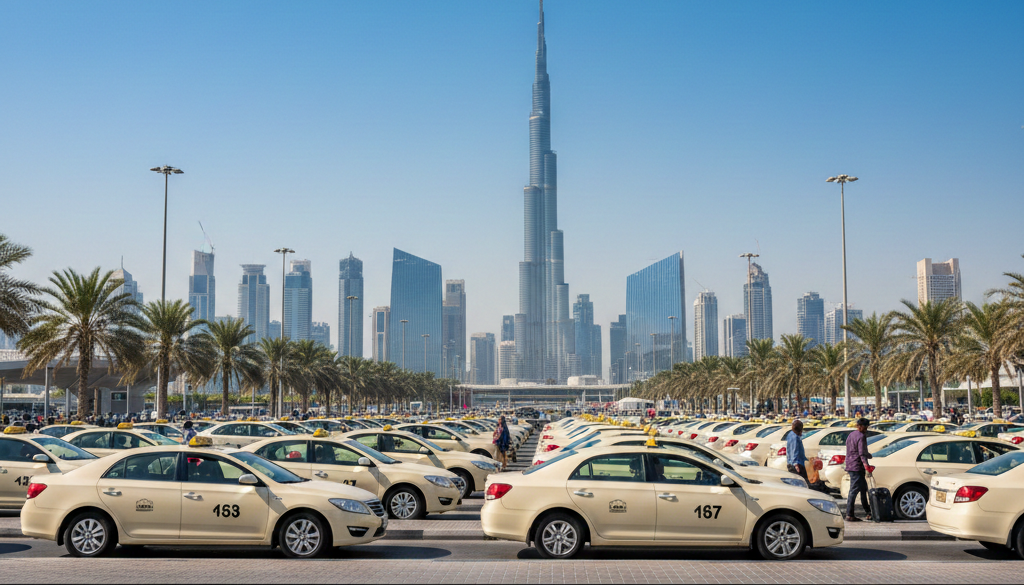
In 2026, the cream-colored body of taxis remains a symbol of authenticity, but the roof colors act as an identification code so passengers know what service they are receiving:
Red Roof (DTC): The primary symbol of the Dubai Taxi Corporation (government-owned); these vehicles are scattered throughout the city and offer the highest accessibility.
Blue, Green, and Yellow Roofs: Represent private franchise operators that operate with exactly the same government standards but under the management of companies like “Cars Taxi” or “National Taxi.”
Pink Roof (Ladies & Family): This service has become a symbol of security and privacy. The female drivers of this fleet are trained not only in driving but also in providing local guidance to women and families.
Black Fleet (VIP): These vehicles, mostly electric limousines and Tesla Model X, lack the classic roof sign and are available only through private booking for those seeking prestige and extra comfort.
Special Services and Emerging Technologies 2026
1. Driverless Experience (Cruise Origin)
In areas like “Downtown” and “Jumeirah,” you can ride special Cruise Origin vehicles where seats face each other (no steering wheel or pedals). These vehicles are designed for short business meetings or family chats during the journey.
2. The Era of Air Taxis (eVTOL)
Dubai is the world’s first city to officially integrate “Vertiport” stations for air taxis. These electric vertical take-off and landing aircraft travel from the airport to Palm Jumeirah—a route that can take 45 minutes in traffic—in less than 8 minutes.
3. Inclusive Services for People of Determination
All major stations are now equipped with “Smart Taxis” featuring advanced hydraulic jacks that guide wheelchairs into the cabin without the need for physical assistance from the driver.
Anatomy of Fares and Costs in 2026
Costs in Dubai 2026 reflect the quality of service and the maintenance costs of new technologies. Prices are transparently displayed on internal vehicle screens and apps:
Flag Fall (Starting Rates)
City Daytime Trips (6 AM to 10 PM): Starting from AED 6 to 8 (depending on the zone).
City Midnight Trips (10 PM to 6 AM): AED 9 due to high demand and night shift services.
Smart Booking (Hala/Careem): Between AED 12 and 15; this cost includes a guarantee that the vehicle will reach your location in less than 3 minutes.
Airport Entry: AED 25; this flat rate applies to all terminals to cover airport logistics costs.
The Ultimate Dubai Transport Guide: How to Navigate the City Like a Local
Distance and Waiting Rates
Per Kilometer Rate: Approximately AED 2.5 to 2.7. The vehicle’s smart system selects the most optimal route based on real-time traffic to avoid unnecessary mileage.
Minimum Fare: AED 15; even for very short trips (e.g., from one block to another), paying this amount is mandatory.
Waiting Charge: AED 40 per hour (or equivalent per minute). This amount is calculated when the vehicle is stopped in heavy traffic or at the passenger’s request.
Smart Additional Costs
Salik Tolls: AED 4, which is automatically recorded by RFID sensors when passing through gates and added to the final invoice.
Value Added Tax (VAT): 5% tax is usually included in the final meter reading.
Professional Tips for Travel Management
Nol Card Integration: Your Nol card in 2026 has become a “digital transportation wallet.” Using it in taxis is not only faster but sometimes includes “loyalty” discounts for frequent passengers.
Smart Pooling: If you are not in a hurry, use the “Carpool” option in the app. This can reduce your travel cost by up to 40% and help reduce the carbon footprint.
Traffic Monitoring in S’hail: Before taking a taxi, check the S’hail app. If Sheikh Zayed Road is “red,” the best strategy is to take the metro to the nearest station to your destination and take a short taxi (Last Mile) from there.
Frequently Asked Questions (FAQ)
1. Is cash payment still common?
Although Dubai has moved toward a cashless society in 2026, drivers still accept cash. However, using Apple Pay, Google Pay, or the Nol card is highly recommended for speed and accuracy.
2. How to ensure safety in autonomous taxis?
These vehicles are monitored by the RTA’s 24-hour control center. In case of any problem, a physical and virtual “SOS” button is available that immediately establishes a voice and video connection with a human operator.
3. What is the price difference between Uber and Hala Taxi?
Hala is the official and economical version of city taxis, while Uber focuses more on luxury private cars without taxi markings, which are usually 20% to 30% more expensive.
Dubai 2026 is a city where every trip is part of a futuristic experience. With knowledge of these details, travel smart!